In Reverence
‘‘One of the great tragedies of our human existence is that we have tamed our wildness and called it beauty.’’
I made the long journey to the Isle of Harris recently to celebrate my partner, Darcia’s, birthday, which also happens to be New Year’s Day.
As well as spending quality time with her away from the humdrum of daily routine and monotony, I was eagerly anticipating a trip to such a beautiful location, as it was bound to provide me with opportunities to reconnect with Mother Nature and step into my creative shoes.
Having found a place for my spirit to rest amongst the ancient trees and beside the tranquil mountain lakes of Eryri in recent years, I was looking forward to getting out of my comfort zone and exploring new landscapes in pursuit of stories to tell with my camera.
I have heard such wonderful things about Harris over the past few years and seen some magnificent photographs from fellow photographers who have borne witness to its majesty.
No matter how many photographs I see of a place, however, nothing ever beats the wonder and curiosity evoked when my eyes are met by new horizons for the first time.
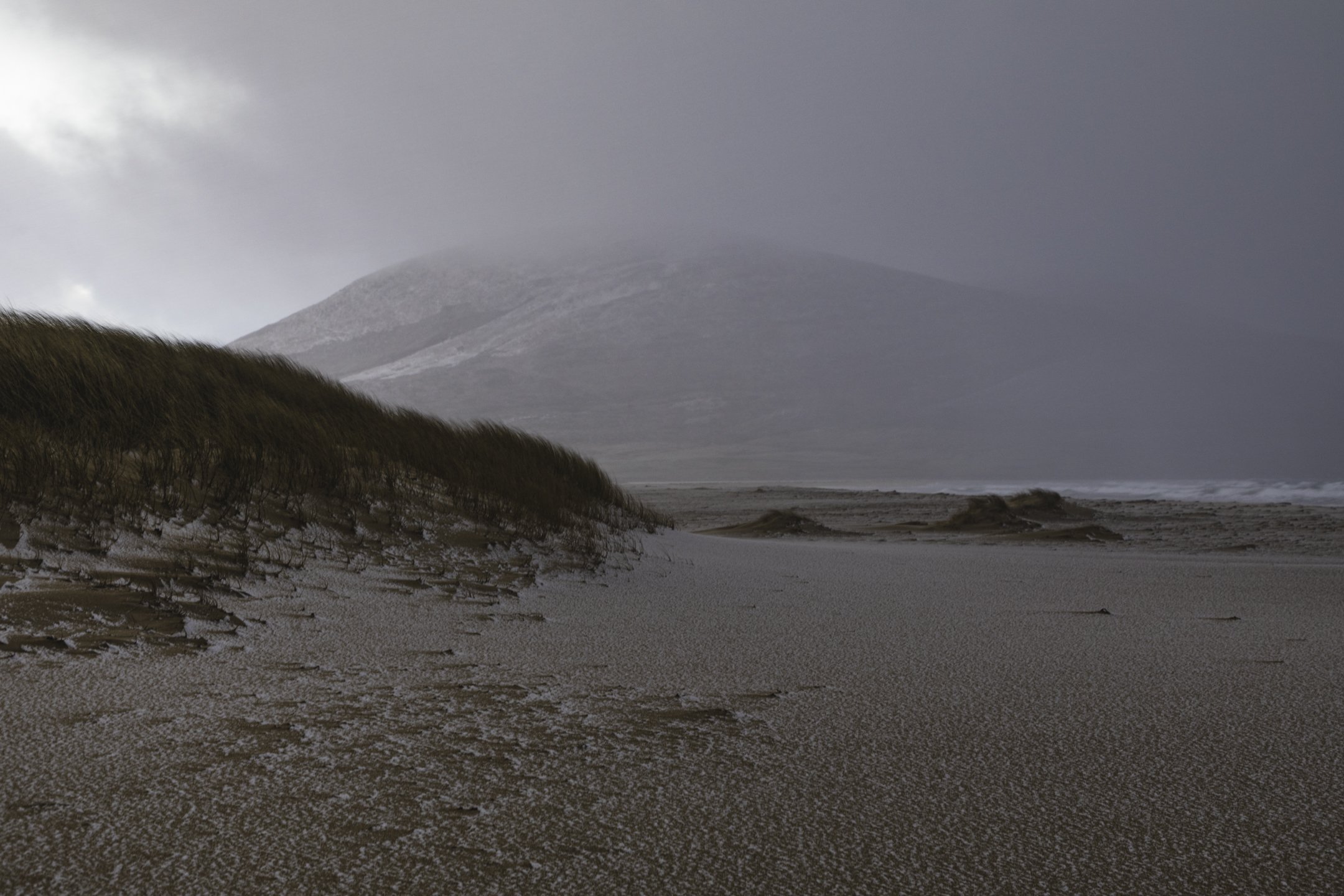
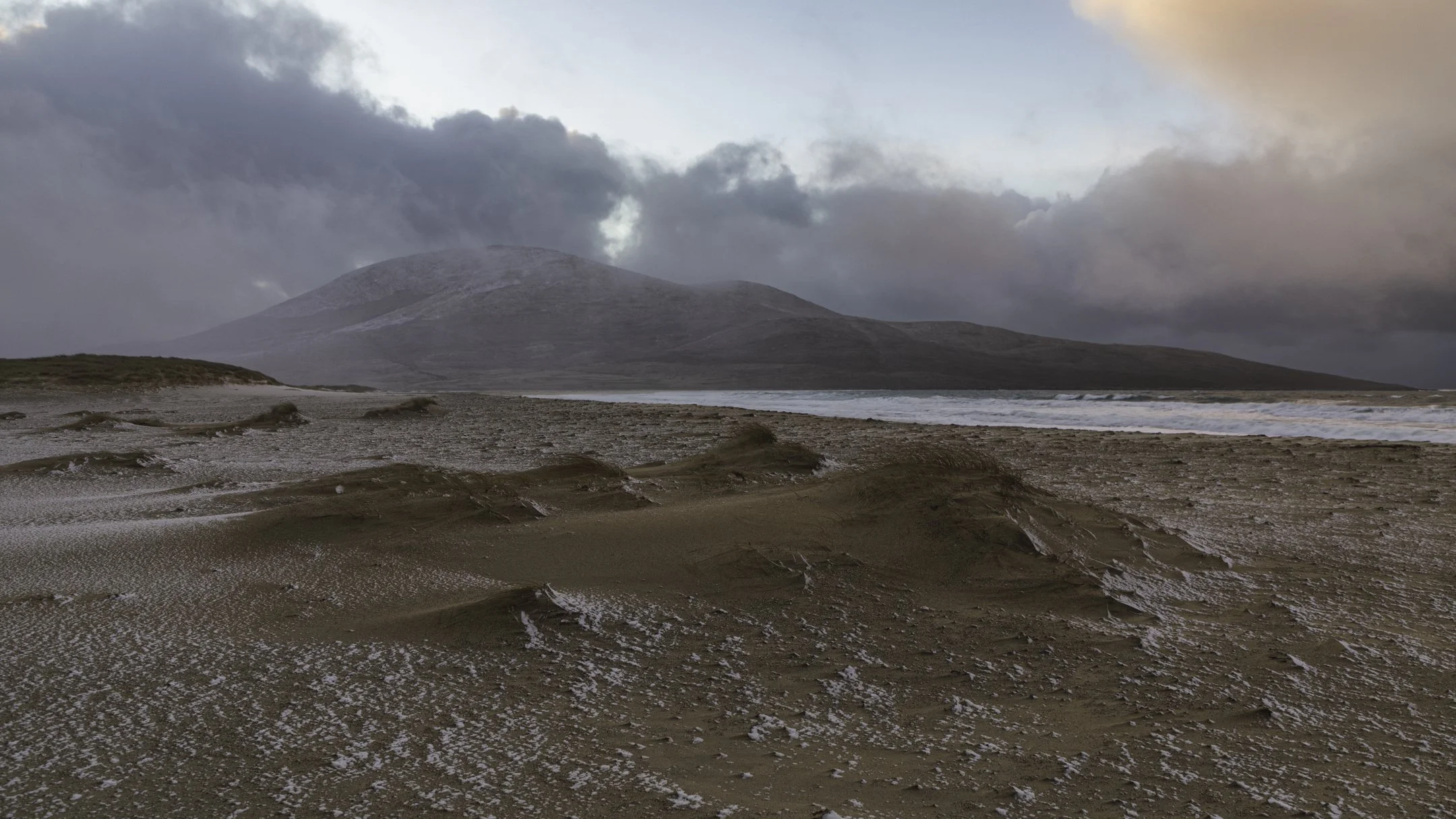
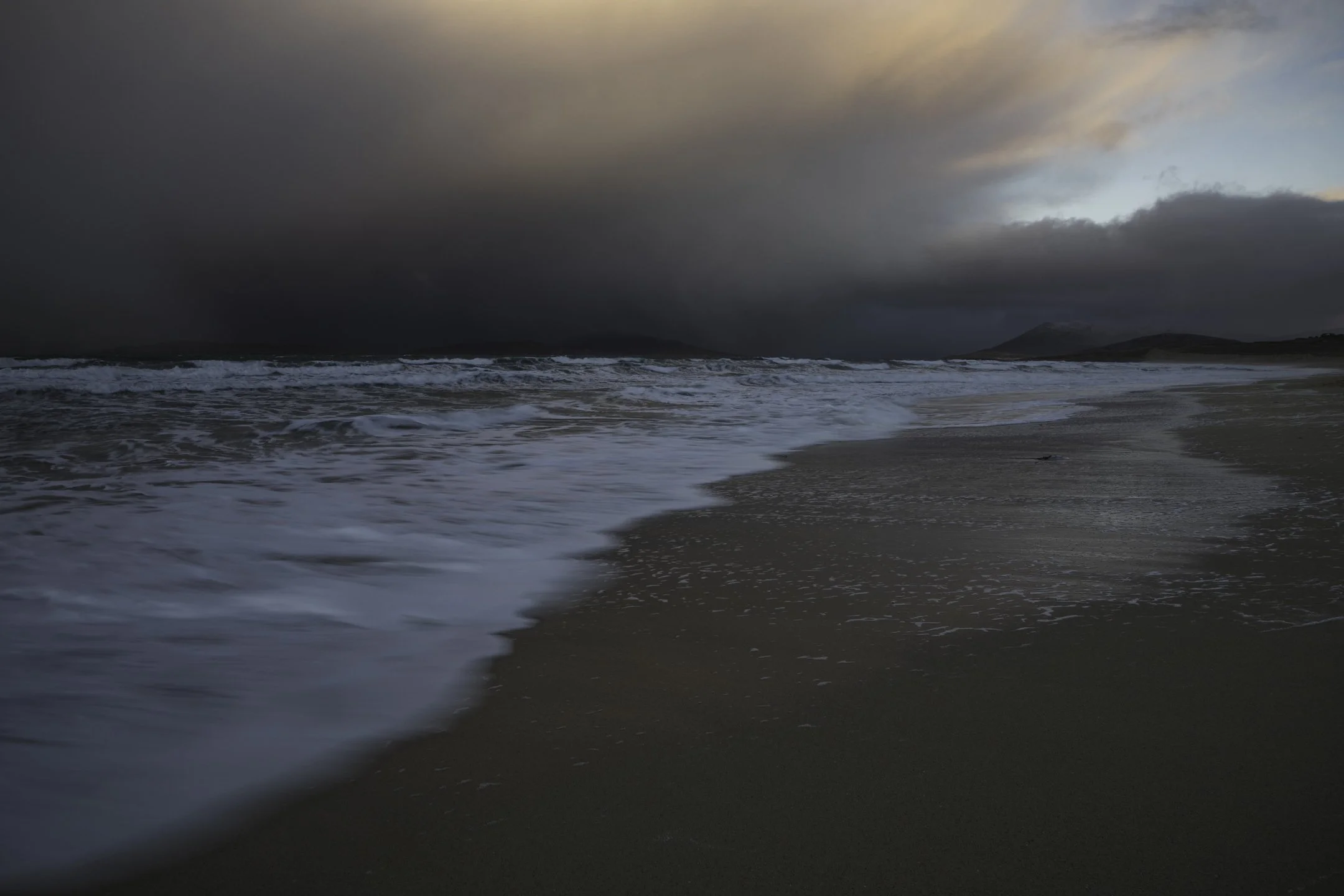
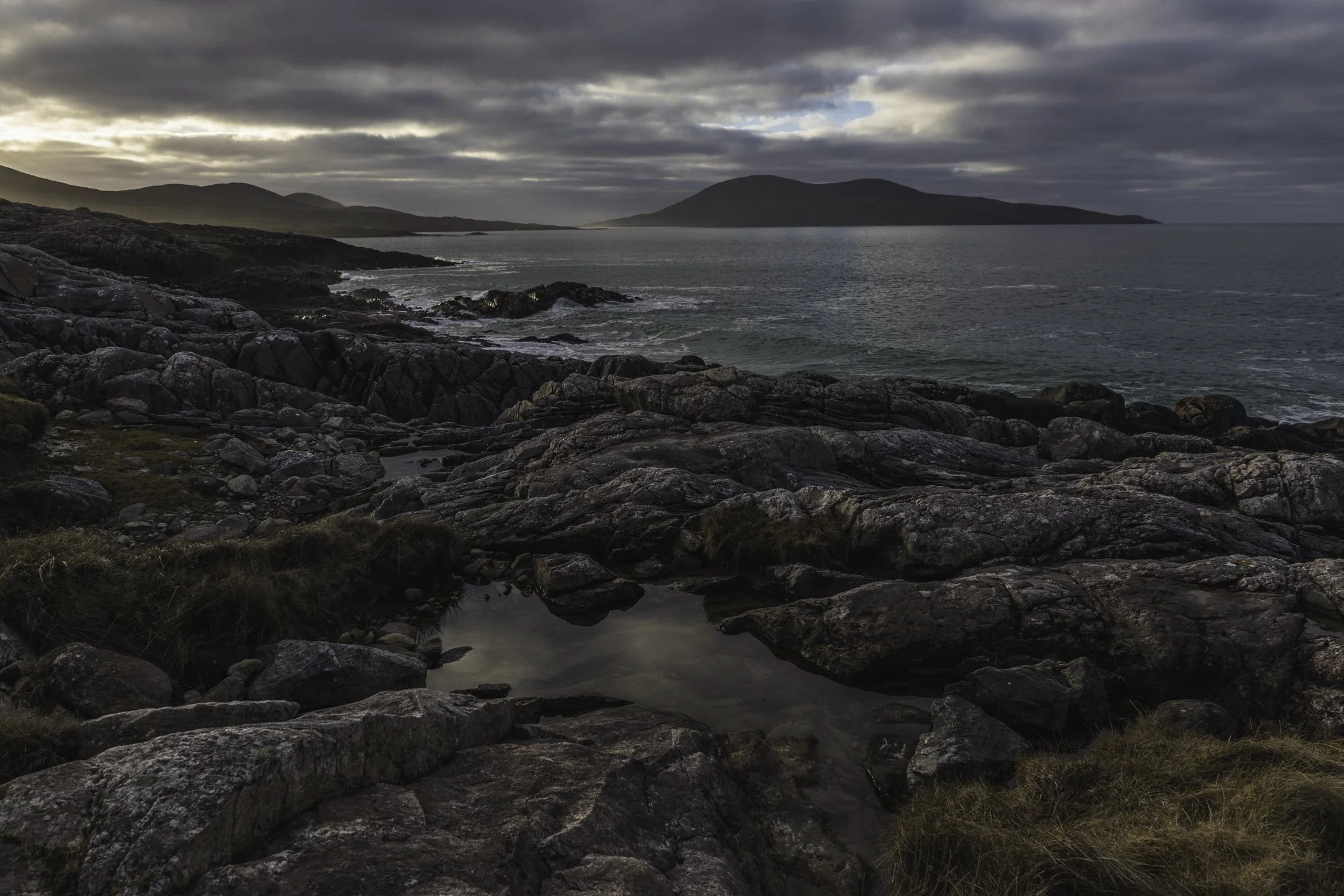
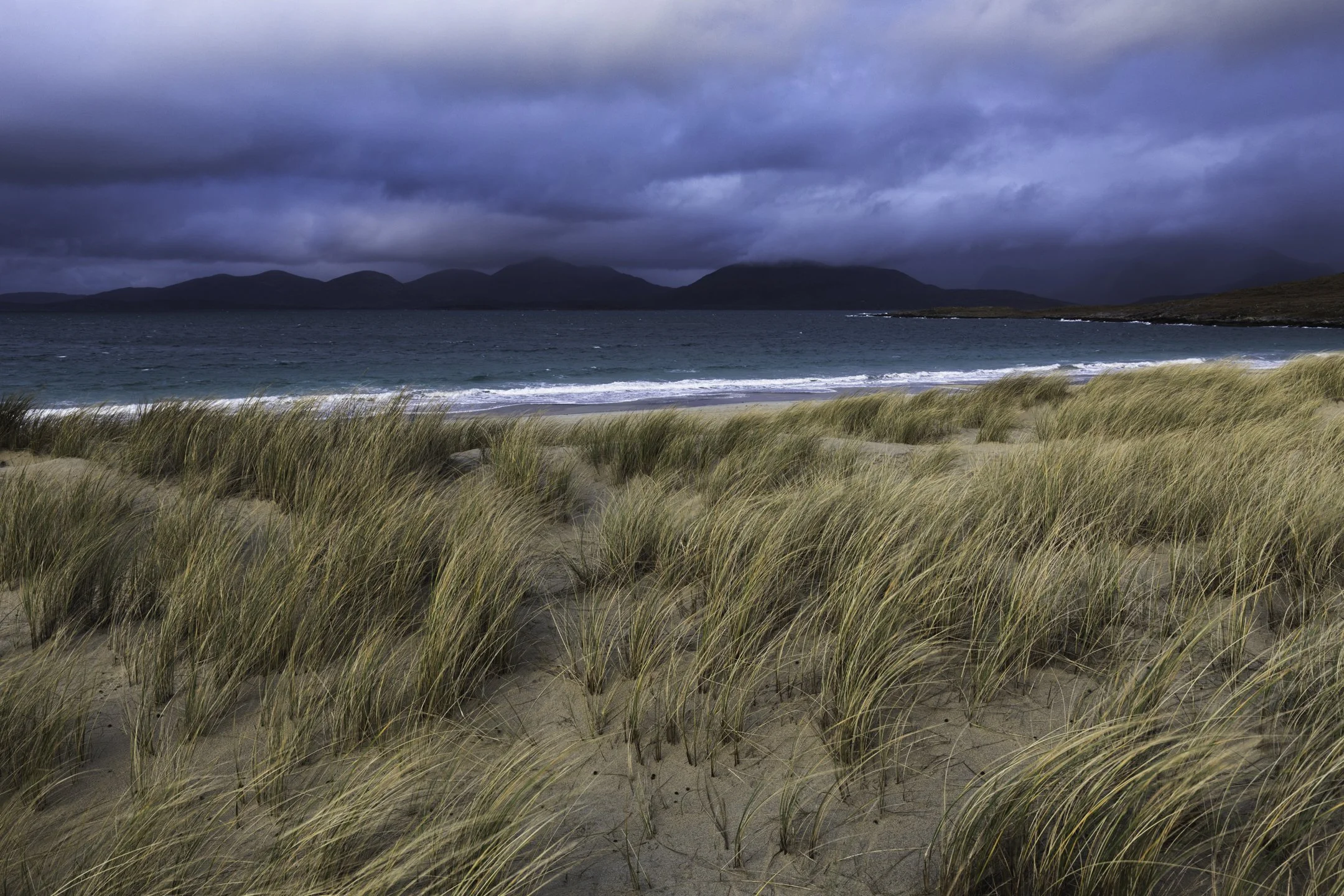
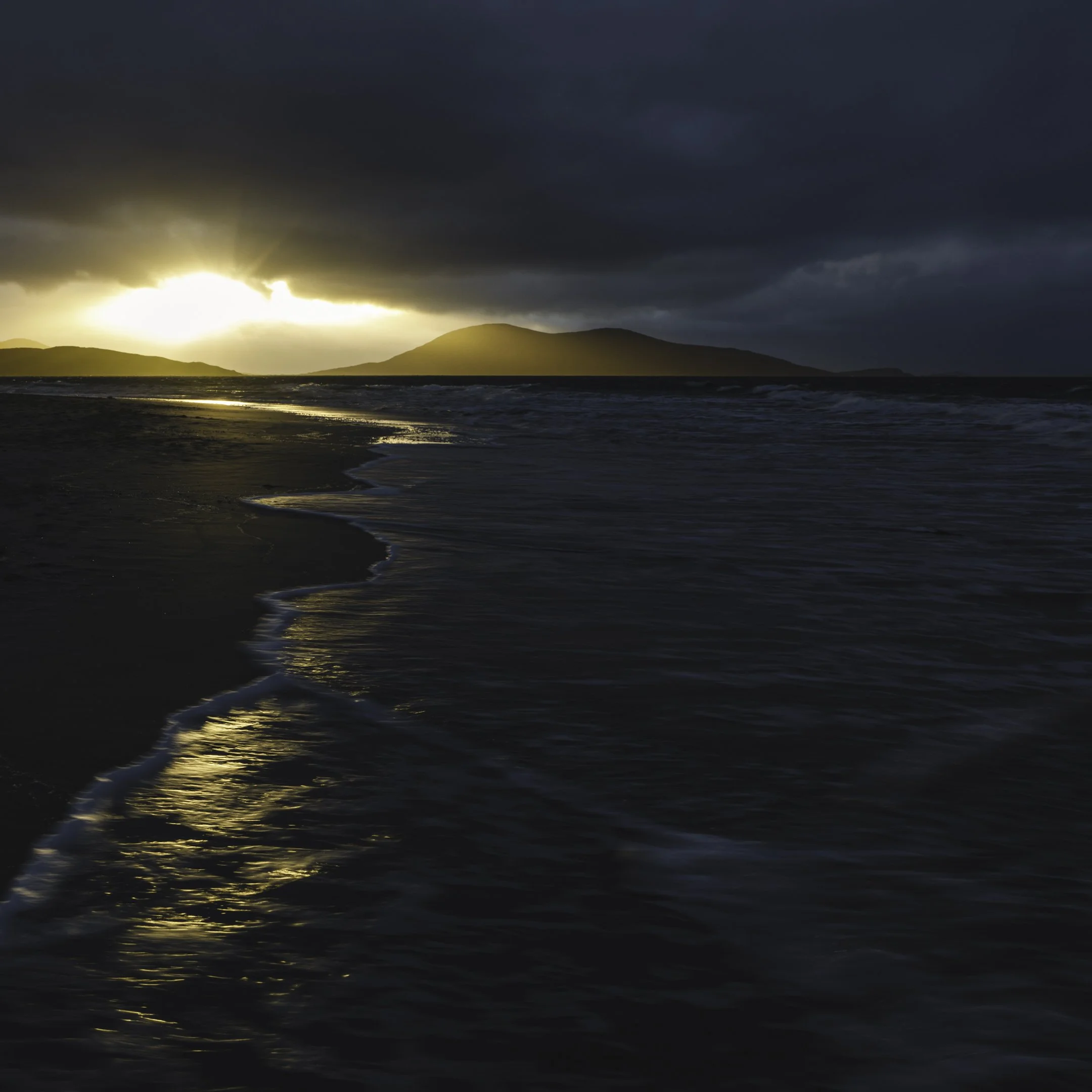
I stood before the wild Atlantic Ocean, with my heart open to new experience, born again as I gazed out into the dark abyss.
I never realise how much I need the trip until I forget myself and lose my mind to the state of pure presence that only Mother Nature can pull me into. That presence is always significantly deepened when I find myself immersed in such wild and unpredictable elements.
One of the great tragedies of our human existence is that we have tamed our own wildness and called it beauty.
We keep the raw and untamed parts of ourselves repressed through fear that they will be rejected and judged by others.
We conform, follow the status quo, please others by withholding our hearts’ truth, and do all that we can to fit ourselves into a box within the normalcies of society.
Not only do we tame our own wildness, but we then go on to manicure the landscape, stripping it of its true nature.
We engineer the weather, disrupt entire ecosystems for our own capital gain, plant perfectly symmetrical rows of trees to replace what we have destroyed, rid our lawns of weeds and wildflowers, and choose to take walks in manufactured woodlands and gardens instead of visiting truly wild spaces where chaos and unpredictability reign.
We have lost our respect and reverence for Mother Nature entirely.
Is it any wonder she fights back?
She is yearning to get our attention.
She is longing to be witnessed in her wildest moments.
She is trying to reclaim what is rightfully hers.
My own lens over the past few years has been fixed almost entirely on beauty in the traditional sense: the calm, peaceful moments when the sun burns through the morning’s mist; the mirror-like reflections of a mountain lake; and the interactions of soft, attractive colours that are met gracefully by diffused golden sunlight.
What this trip to Harris taught me is that I have been neglecting a fundamental side of Mother Nature—and, perhaps, myself.
I have become increasingly comfortable on my creative path, avoiding going out with my camera in search of stories unless the weather is pristine and promising moments of serenity that will provide me with an opportunity to create work in my photographic ‘style.’
In my pursuit to eliminate ego from my life through the fires of creative practice, I have been falling behind the veil of an artistic identity, making predictable images of quiet, mystical woodland scenes and serene lakeside landscapes in pursuit of growth and success.
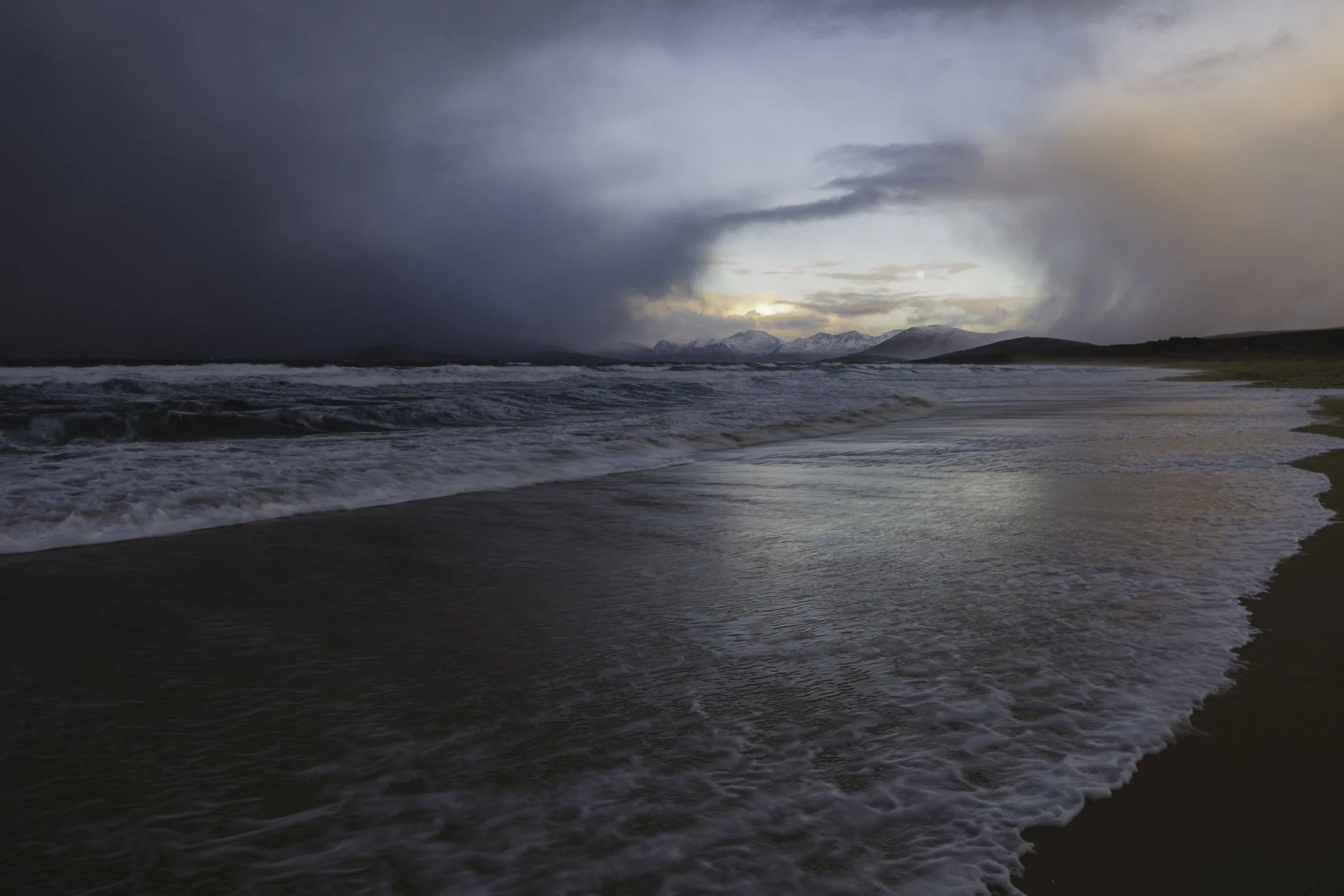
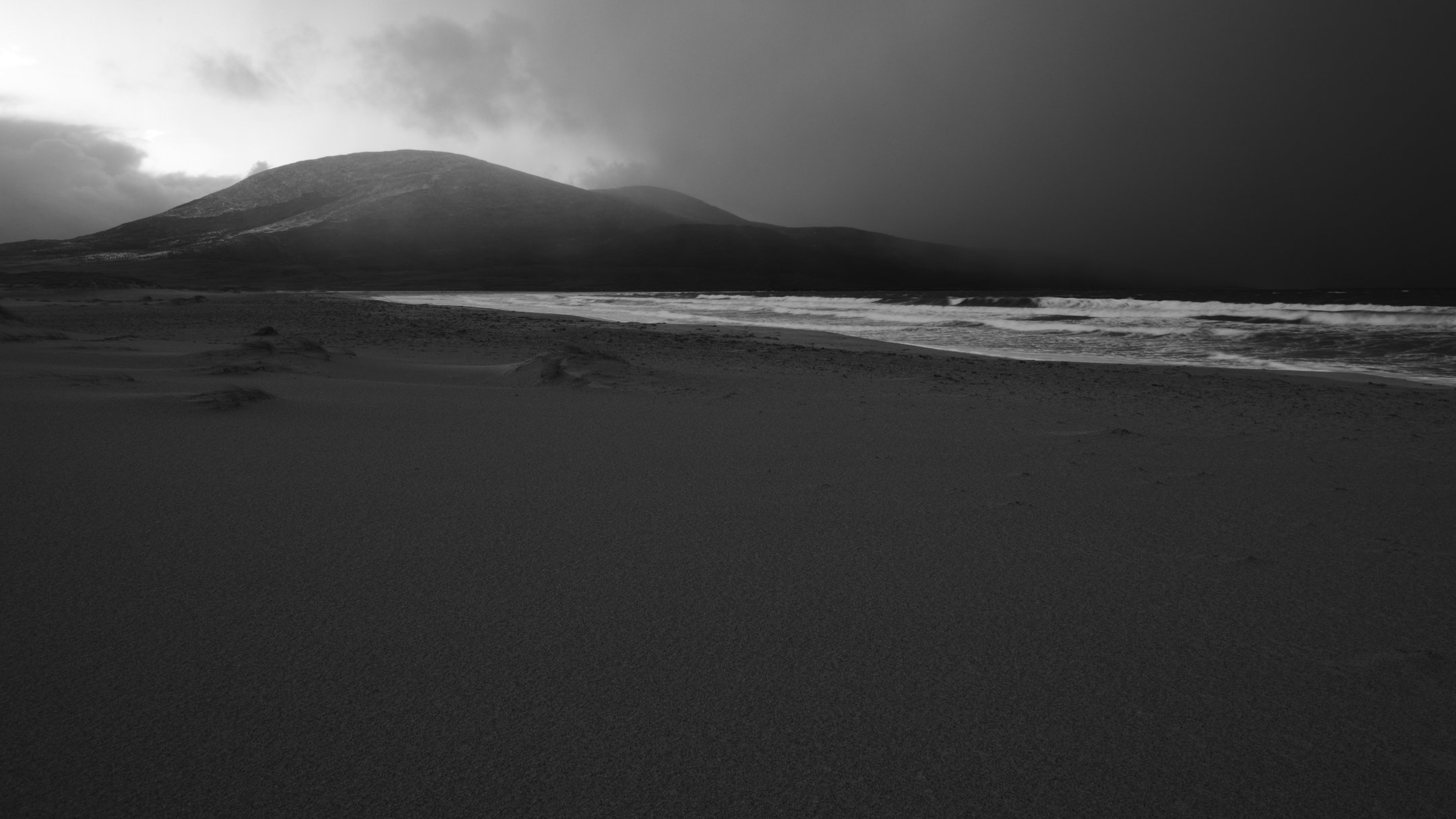
‘‘What about my wildness?’’ I heard the spirit of the ocean asking as I stood on Harris and faced the waves of snow, sleet, and hailstorms that were charging towards me across the Atlantic. ‘‘When are you going to see the beauty of the winds that sculpt the landscape like the potter’s hands? When are you making time to allow these ferocious tides to baptise you and cleanse and renew your weary soul?’’
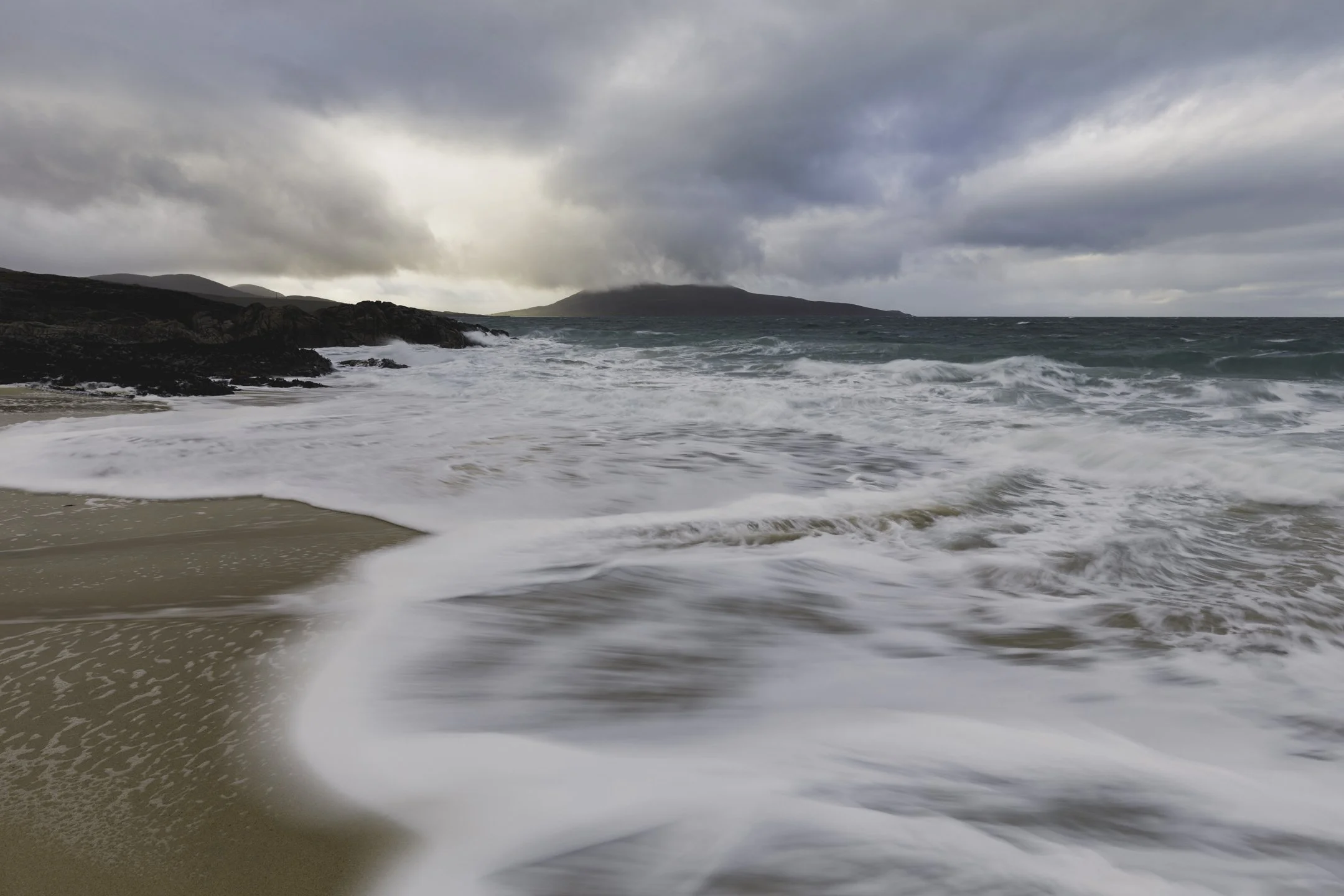
Only a few days ago, I was deep into a conversation with a mentoring client, whom I am working with on my 12-month ‘Hero’s Journey’ program to help her develop her artistic vision and deepen her creative voice. We gravitated to the topic of fears as we work together to navigate beyond some of the blocks that have surfaced. She told me that one of her major fears is that of change—a fear that I am sure will be shared by many who are reading this.
Events within my own life have made change a well-known companion of mine, and yet, I still sometimes harbour a fear of change within my art. It seems ironic that I can passionately embrace the rain, the snow, the morning’s first light, the frost, and fog, but the one type of weather I strongly resist with every ounce of my being is the wind that brings about change; the wind that used to ‘ruin’ my perfectly sculpted hairstyle as I wandered along the A458 in Trewern to clear tables and take orders at the Little Chef as a teenager; the wind that used to pummel me as I attempted a long diagonal cross-field pass on football pitches throughout Wales, which I graced for many years throughout my early adulthood.
The wind has angered a part of me for as long as I can remember. Perhaps it has been trying to teach me something important about myself for all these years.
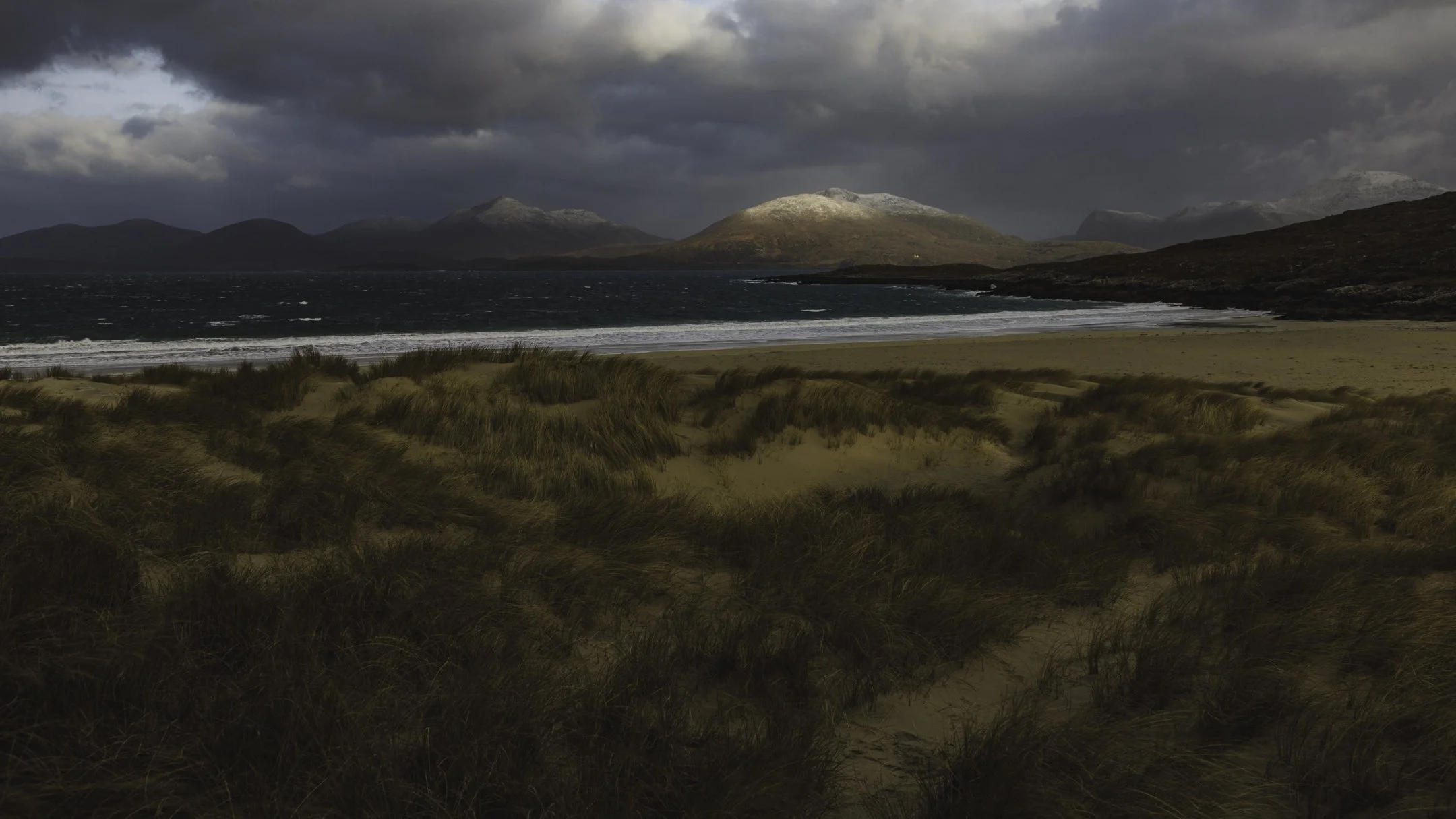
There is a wellspring of anger that flows through our veins, inherited from the ancestors who walked before us, who were unable to feel and release their grief, sorrow, and pain.
It bubbles away like lava beneath the earth’s crust, threatening to erupt at unpredictable intervals.
This anger is our life force, and yet so many of us suppress it, doing all we can to ensure it never seeps through the cracks of our surface to be witnessed by the light of day.
We are rarely educated on how to express our anger. Many of us, in fact, are taught that it is wrong to feel this potent emotion, never mind release it into the world.
What if, instead of rejecting the anger and wildness that is completely natural to us—especially when we witness the mistreatment of another being, or the very landscape that houses us, for that matter—we learnt to embrace this sacred force and use it to create much-needed change in the world?
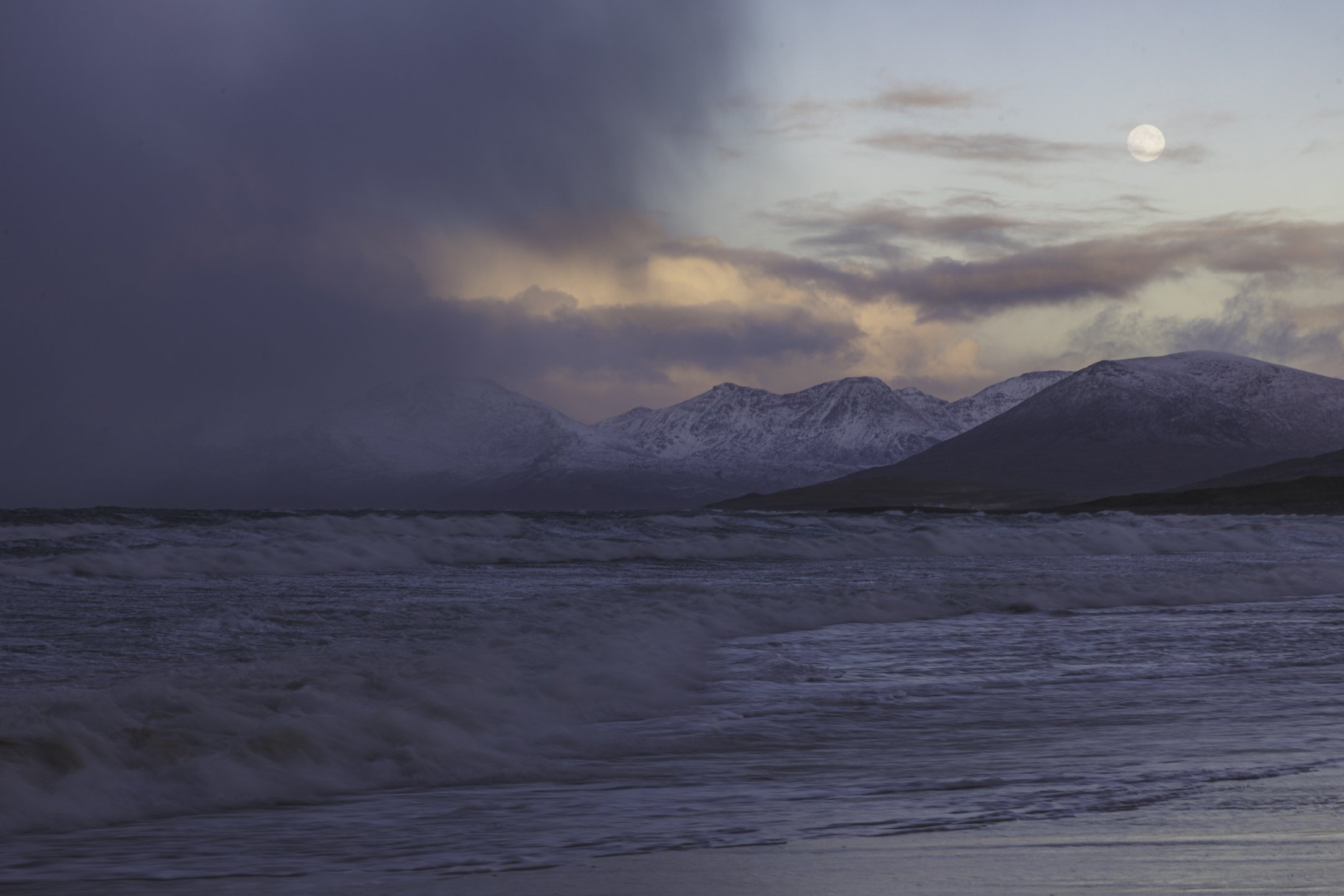
When I think back over my journey as a photographer so far, some of my most memorable moments have been those when I have been immersed in the chaos of Mother Nature’s madness, such as the one where I found myself isolated and alone atop Moel y Golfa, and surrounded by storms back in 2021; an experience I wrote about passionately in a previous essay published in Nature Vision Magazine.
What makes these fleeting moments of majestic light and dynamic atmosphere in landscape photography so memorable is that they are often so few and far between. You can roam for hours, days, sometimes weeks, or even months, for little reward in terms of photographs. When you are eventually granted conditions like these for your patience and persistence, however, it makes everything worthwhile. These fleeting moments become a part of you, and you carry them with you for eternity.
I was reminded by the untameable elements in Harris of what it really means to be a landscape photographer. The late mythologist, Joseph Campbell, talks of following one’s bliss if one is to live a truly meaningful life. I interpret this teaching as doing that which makes one feel fully alive. That, for me, is being completely engaged in the moment behind my camera, fully present and aware of my surroundings and all that is happening around me.
To find this sacred place called ‘Bliss’, we must venture outdoors and open ourselves to new experiences. We must stop seeking safety and doing what is predictable. We must thrust ourselves into the realm of uncertainty and possibility. We must open our hearts to Nature and stand to face the wind as we seek to change and evolve like our souls so desire. We must seek out and embrace all the elements if we are to meet and embody all parts of ourselves—anger and wildness included—and live a life of wholeness and deep fulfilment, sculpting our world as we walk.