
Why do You Feel Overwhelmed in Beautiful Landscapes?
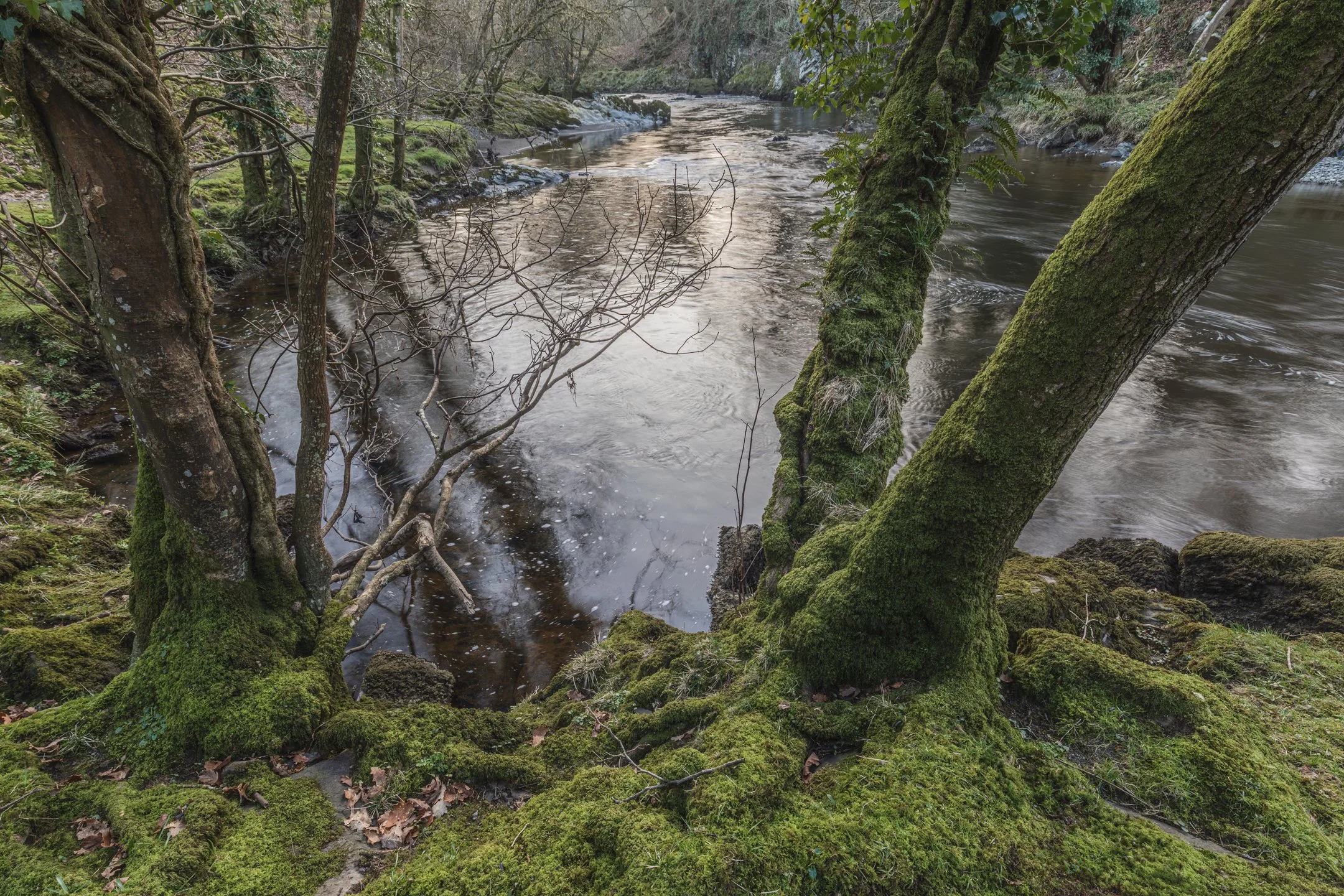
Do you ever arrive at a beautiful scene and panic?
A student on my Photographer’s Foundations Programme described the feeling to me yesterday.
He said that when he arrives somewhere beautiful, he finds himself frantically shooting everywhere.
Trying this angle, then that one. Adjusting. Recomposing. Starting again.
Wanting so badly to capture the beauty in front of him that he ends up feeling overwhelmed rather than being present with the beauty.
I laughed when he told me, because I recognised the feeling immediately. I did exactly this for the first two years of my practice: A hundred frames of the same rock, making tiny adjustments & using different settings.
What I’ve come to understand is that the overwhelm isn’t a sign that you’re doing something wrong. It’s actually a sign of the opposite. You’re being moved deeply by a place; there is a feeling there — too many feelings, in fact — waiting to be expressed.
The problem is that when we act from that place of urgency, when we let the wanting run ahead of us, we photograph reactively rather than intentionally.
We collect images rather than creating something meaningful.
The camera becomes a net we’re frantically throwing overboard, hoping something, anything, will land in it.
What I’ve found to be the antidote is almost embarrassingly simple: put the camera down for a moment.
Pause long enough to ask yourself one simple question: what is it exactly in this landscape that is actually singing to me right now?
There is almost always an answer. It might be the sound of water you can hear enveloping the rocks. It might be the quality of the light on a particular tree. It might be a feeling: of insignificance, of peace, of something deep and ancient.
When you find that thread and follow it, the overwhelm dissolves.
You’re no longer trying to photograph everything. You’re trying to say one thing. And that can be powerful.
This is ‘Intention’, and it’s the second of my Five Pillars of Meaningful Landscape Photography™.
This marks the moment when you stop reacting to a landscape and start listening to it instead.
When you ask not just what is here? But what does this place want to say, and how can I say it?
My student already has the most important thing: he feels the beauty. His heart opens in the landscape.
All we’re working on now is developing the understanding to translate the beauty into a photograph. The technical knowledge, of course, matters, but only insofar as it gives him the confidence to be calm and remain present when the beauty arrives.
That is the real work of this craft: learning to be still enough, present enough, that the photograph can find you.
If this resonates with where you are in your own practice, I’d love to hear about it in the comments. And if you’re curious about what it looks like to work on the Four Pillars — in a structured, supported way, feel free to explore the Photographer’s Foundations Programme.